 GENERATION
STORAGE
FLEXIBILITY
GENERATION
STORAGE
FLEXIBILITY
The Sun.
Our past, present and future energy source.
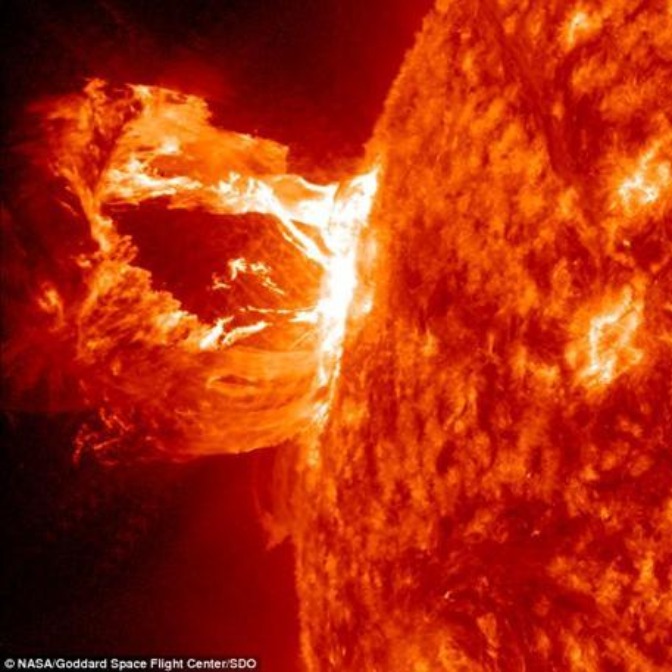
A fusion nuclear plant. And not in our backyard.
In the core of the Sun a thermonuclear fusion reaction takes place. The nuclear reaction converts hydrogen into helium at a temperature of 15.8 million kelvin degrees (K). The energy produced by fusion is transferred by radiation from the core outward to convective layers. It reaches the external surface, photosphere, at a temperature of 5,800 K before it escapes into space as sunlight. At the photosphere the solar radiation intensity is approx. 62,500,000 MW/m2. The Sun is, on average, 150 million km away from the Earth.
8 minutes.
Despite its distance from the Earth, solar energy transport is fast. The light travels at 300,000 km per second. So it takes less than 8 minutes and 20 seconds for the light to reach our planet from the Sun.
No cables, no pipelines, no trucks, no trains, no ships. Sunlight transports energy fast, efficiently, long-distance.
Sunlight reaches the entire surface of the Earth. On top of Earth’s atmosphere the average solar intensity is 1,361 W/m2 (solar constant).
Every instant sunlight carries a total power of 174 PW (that is 174,000,000 GW) on Earth upper atmosphere.

Primary energy source.
Sunlight is Earth's primary source of energy. Other energy sources are the fissionable materials generated by the cataclysmic death of another star. These fissionable materials trapped in the Earth's crust are the source for geothermal energy and nuclear fuel.
Photosynthesis by plants captures the energy of sunlight and converts it to chemical form. The energy stored in petroleum and other fossil fuels was originally converted from sunlight by photosynthesis in the distant past.
One year of solar energy on land is many times the sum of total reserves of fossil and radioactive fuels.)
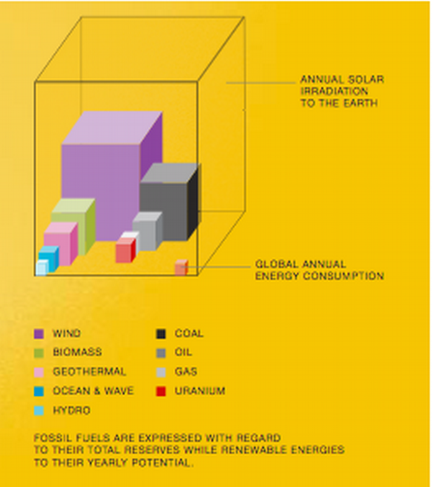
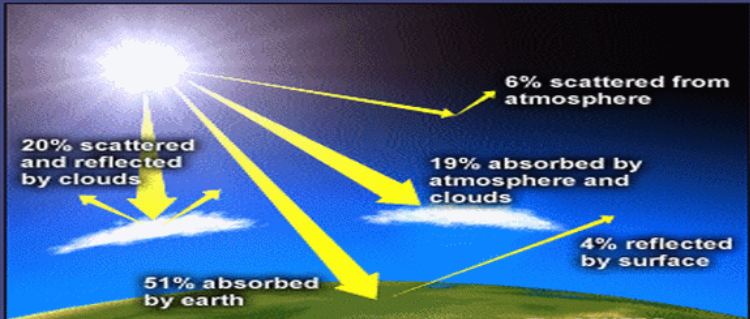
Sunlight. Quite a lot of energy.
Some sunlight is reflected or absorbed by the atmosphere and clouds. The rest reaches directly or scattered lands and oceans.
The solar light reaching the Earth surface carries a lot of energy. A total of approx. 136 PW reaches the Earth every second, 489 EJ in one hour, 1,070,000 PWh (or 3,850,000 EJ) in one year.
Total world yearly energy consumption in 2010 was 539 EJ. A little more than one hour of sunlight would cover all world energy consumption of one year.
A surface of approx. 700,000 km2 of photovoltaic (PV) modules would cover total world energy consumption. That surface would be less than 8% of the Sahara desert area.
